
Why ExpressLRS Dominates the FPV Link Landscape
ExpressLRS (ELRS) has become the de facto standard for FPV drone control links, delivering staggering range, ultra-low latency, and an open-source ecosystem that no proprietary system can match. With the release of ExpressLRS 3.5, the platform has matured into a production-ready system suitable for everything from indoor whoops to 50-kilometer long-range missions.
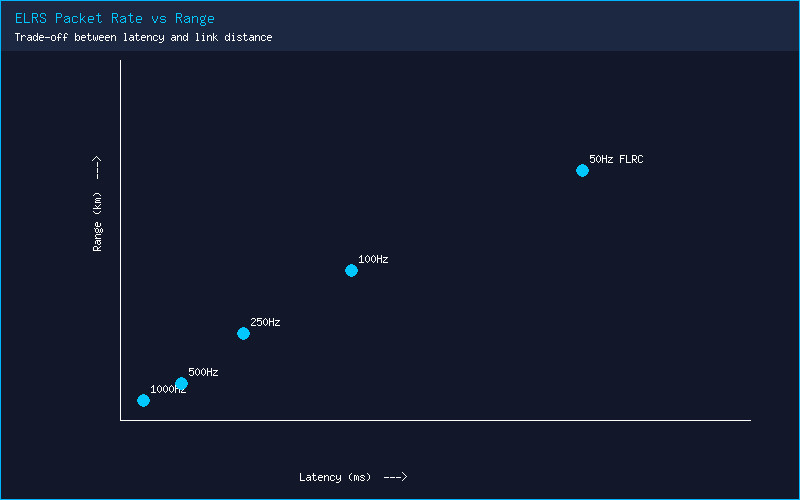
ELRS operates on the 2.4 GHz and 900 MHz bands using LoRa modulation, which achieves incredible sensitivity through spread-spectrum techniques. A typical 2.4 GHz ELRS setup at 100 mW output power can comfortably reach 5-10 km with clear line of sight. Push it to 1 W dynamic power on 900 MHz, and ranges beyond 30 km are achievable — all with latency under 10 ms in the fastest packet rates.
Hardware Selection and Flashing
The ExpressLRS ecosystem includes hardware from Radiomaster, Happymodel, BetaFPV, Matek, AxisFlying, and more. For a new build, the Happymodel EP1 Dual TCXO receiver is an excellent budget choice with true diversity. For 900 MHz long-range builds, the Radiomaster RP3 Diversity receiver offers superior sensitivity and filtering. On the transmitter side, most modern radios with a module bay (Radiomaster TX16S, Boxer, Zorro, or Jumper T-Pro) can accept an ELRS module like the Happymodel ES24TX Pro or Radiomaster Ranger.
Flashing ELRS 3.5 is streamlined through the ExpressLRS Configurator. Connect your module or receiver via USB (or USB-to-serial adapter), select your target, choose the latest 3.5.x release, and flash. ELRS 3.5 introduces WiFi-based flashing for most receivers — simply power the receiver, connect to its WiFi access point, and upload firmware through your browser at 10.0.0.1. This eliminates the need for USB adapters entirely.
Optimizing Packet Rate and Telemetry Ratio
ExpressLRS 3.5 offers packet rates from 25 Hz to 1000 Hz. The 500 Hz mode provides the best balance of latency (4 ms) and range for most pilots. For racing, 1000 Hz delivers sub-3 ms latency but reduces range and sensitivity. For long-range, 50 Hz or 100 Hz modes maximize link budget. ELRS 3.5 also introduces FLRC (Fast Long Range Code) modulation on 2.4 GHz, which narrows the bandwidth for improved range without sacrificing responsiveness.
The Telemetry Ratio setting controls how many uplink packets include a telemetry slot. A ratio of 1:2 means every other packet sends telemetry back to your radio. Higher ratios improve telemetry update rates for LUA script widgets but consume more airtime. For most pilots, Std (1:32) or 1:16 strikes the right balance between control link reliability and telemetry data.
Dynamic Power and Antenna Placement
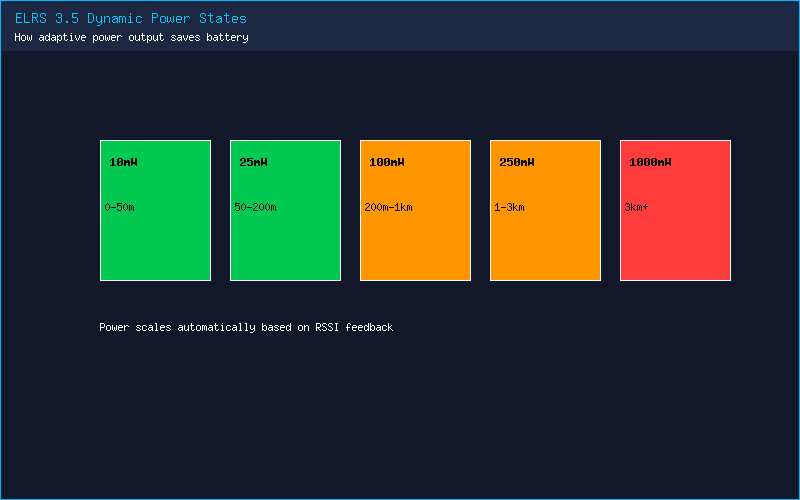
ELRS 3.5 Dynamic Power automatically adjusts transmitter output from 10 mW to your configured maximum based on signal strength. Enable it with a maximum of 250 mW for close-range flying or 1 W for long-range. This saves battery, reduces heat, and minimizes RF noise in the 2.4 GHz band. Pair Dynamic Power with proper antenna placement — keep receiver antennas at 90 degrees to each other, away from carbon fiber and battery packs, and position active elements clear of the frame.
Model Matching and Binding Phrases
ELRS 3.5 uses a Binding Phrase instead of traditional bind buttons. Set a unique 6+ character phrase during flashing, and all your gear with the same phrase binds automatically on power-up. This means one transmitter seamlessly connects to any of your quads without re-binding. Enable Model Match in the ELRS LUA script to assign specific receiver IDs to model slots, preventing accidental arming of the wrong quad from your radio.
ExpressLRS 3.5 represents the pinnacle of open-source RC links. With proper setup, you will never lose signal before you lose video — and for FPV pilots, that is the gold standard of reliability.
Are you running ELRS 3.5 yet? What packet rate do you prefer? Share your setup below!