
Introduction
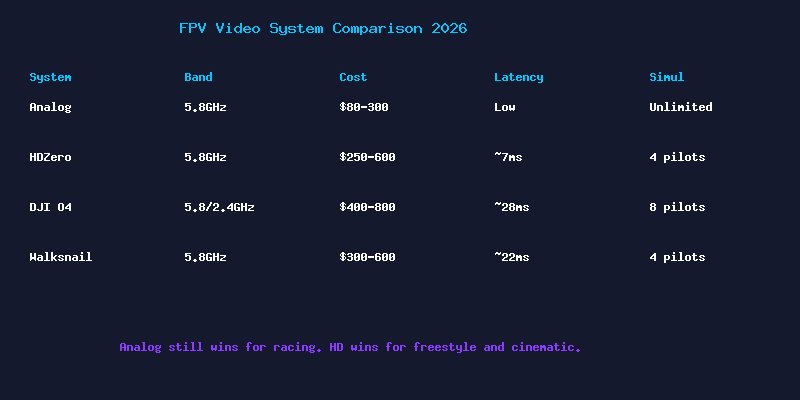
The FPV video system is arguably the most important investment in your setup. It determines what you see while flying, directly affecting your confidence, reaction time, and overall enjoyment. In 2026, pilots face a split ecosystem with four viable options: traditional Analog, HDZero, DJI Digital, and Walksnail Avatar HD. This guide breaks down each system.
Analog The Proven Workhorse
Analog FPV has been the standard for over a decade. It transmits standard-definition video over 5.8GHz with sub-millisecond glass-to-glass latency. Cameras like the Runcam Phoenix 2 and Foxeer T-Rex deliver excellent low-light performance. A complete analog setup goggles, VTX, and camera can cost as little as 0. The key advantage is interoperability: any analog VTX works with any analog goggle. Unlimited pilots can fly simultaneously (with 40MHz channel spacing). Downsides include 480p resolution and vulnerability to multipath interference.
HDZero The Racer Choice
HDZero, developed by Divimath, delivers 720p HD video with fixed 7ms latency. Unlike DJI and Walksnail, HDZero does not use variable compression. If the signal degrades, you see static (like analog) rather than a smeared image. The HDZero goggles include a built-in analog module bay and HDMI input, making them the most versatile goggle on the market. The HDZero whoop VTX and Race V3 VTX are compact and lightweight. This system is the top choice for competitive racers who need low latency with HD clarity.
DJI O4 Air Unit The Premium Experience
DJI O4 is the third generation of DJI FPV digital system. It offers 1080p/60fps video with approximately 28ms latency. The image quality is stunning sharp, vibrant, and effective in challenging lighting. DJI goggles include the Goggles 3 (flagship) and Goggles N3 (budget). The O4 Air Unit records onboard 4K video, eliminating the need for an action camera on many builds. The main drawbacks are a locked ecosystem (DJI VTX only works with DJI goggles), higher cost, and slightly higher latency than HDZero.
Walksnail Avatar HD The Dark Horse
Walksnail Avatar HD matches DJI on resolution (1080p) with competitive latency (~22ms). The Avatar HD Goggles X feature a 1080p OLED display, adjustable diopters, and HDMI output. Walksnail offers the broadest VTX lineup including a 1S whoop board, a dual-antenna Pro kit, and the Moonlight 4K recording unit. The open approach (supporting third-party integration) makes Walksnail attractive to builders who want HD without vendor lock-in.
VTX Power and Antenna Selection
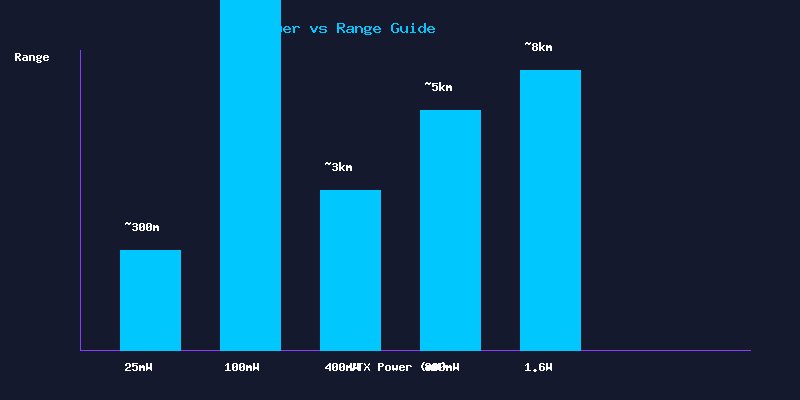
VTX output power directly affects range. For analog, 25mW is adequate for indoor whoops and proximity flying, while 800mW-1.6W is standard for long-range. Digital systems typically max out at 1.2W (FCC). Antenna choice is equally critical: a quality circular polarized antenna like the TrueRC X-Air or Lumenier AXII 2 provides vastly better signal than the stock dipole whips.
Which System Should You Choose?
- Budget under 00 total: Analog. An Eachine EV800D + Rush Tank Solo VTX setup is hard to beat for value.
- Racing focus: HDZero. The fixed 7ms latency and static-on-breakup behavior are ideal for competitive flying.
- Cinematic and freestyle: DJI O4 or Walksnail. The HD image quality transforms the flying experience. If you already own DJI goggles, stick with DJI. If starting fresh, Walksnail offers better value and flexibility.
Conclusion
There is no single “best” FPV video system in 2026 only the best system for your priorities. Budget-conscious pilots should stay analog. Racers will appreciate HDZero latency. Freestyle and cinematic pilots should go digital with DJI or Walksnail. Whatever you choose, invest in quality antennas, as they affect your video link more than any other single component.