
3D printing has revolutionized how FPV pilots design, prototype, and produce drone frames. From durable TPU bumpers to fully printed 5-inch frames, additive manufacturing offers unlimited customization at a fraction of traditional CNC costs. This guide explores the best materials, print settings, and design principles for 3D printed FPV drone frames that actually survive real crashes.
1. Can You Really 3D Print a Drone Frame?
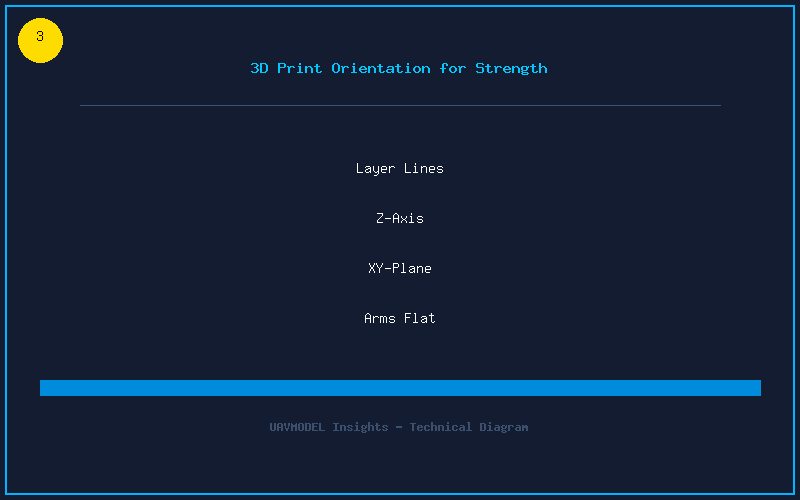
The short answer is yes — with the right design and material. While injection-molded or CNC carbon fiber will always be stronger per gram, properly designed 3D printed frames can absolutely fly and survive moderate crashes. The key is understanding that 3D printed parts have different failure modes than carbon fiber: they tend to crack along layer lines rather than delaminate. Smart design accounts for this.
2. Material Selection — What Actually Works
Not all filaments are created equal for drone frames. Here’s a practical breakdown:
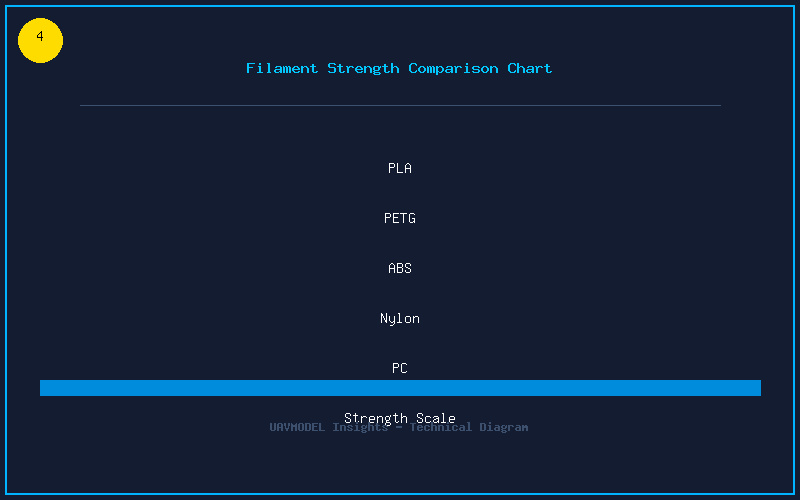
| Material | Strength | Weight | Print Difficulty | Best Use |
|---|---|---|---|---|
| PLA+ | Medium | Heavy | Easy | Prototypes, test fits |
| PETG | Medium-High | Medium | Easy | Beginner frames, 3″ or smaller |
| ABS | High | Light | Moderate | Durable frames, needs enclosure |
| ASA | High | Light | Moderate | UV-resistant outdoor frames |
| TPU (95A-98A) | Low rigidity | Medium | Moderate | Bumpers, mounts, soft parts |
| Nylon (PA6/PA12) | Very High | Light | Hard | Best overall, needs dry chamber |
| PC (Polycarbonate) | Extreme | Light | Very Hard | Pro-level frames, 300°C+ required |
| PLA-CF / PETG-CF | High stiffness | Very Light | Moderate | Carbon fiber reinforced, stiff |
Winner for beginners: PETG strikes the best balance of printability, durability, and cost. For serious builds, dried nylon or carbon-fiber-filled filaments offer performance approaching CNC frames.
3. Print Settings That Maximize Strength
Layer adhesion is everything. A frame that delaminates on the first crash was printed wrong. You can find many high-quality 3D printers and filament dryers at UAVMODEL to ensure your prints are reliable.
- Nozzle temperature: Print at the upper end of the filament’s recommended range. Hotter = better layer bonding.
- Part cooling fan: Turn it down or off for materials like ABS/ASA/Nylon. Slower cooling = stronger interlayer bonds.
- Infill: 40-60% gyroid or cubic infill. These 3D patterns provide multidirectional strength. Avoid grid infill — it creates weak points where lines cross.
- Wall count: 3-4 perimeter walls minimum. Walls contribute more to strength than infill does. For motor mounts, go to 5-6 walls.
- Layer height: 0.16-0.2mm. Thinner layers = more layers = more potential failure points. But too thick reduces detail. 0.2mm is the sweet spot.
- Top/bottom layers: 4-5 solid layers. These handle compression loads from screw mounting.
- Orientation matters: Orient the part so layer lines are perpendicular to expected impact forces. Arms should be printed flat for crash resistance.
4. Frame Design Principles for 3D Printing
Designing for additive manufacturing requires different thinking than carbon fiber. Key principles:
- Fillet everything. Sharp internal corners concentrate stress. Use minimum 3mm fillets at all junctions.
- Gusset the arms. Triangular braces where arms meet the body distribute crash forces away from the weakest point.
- Interlocking joints. Split large frames into printable sections with dovetail or puzzle-piece joints that glue together.
- Integrate motor soft-mounting. Design TPU inserts or use flexible filament at motor mounts to reduce vibration transfer.
- Heat-set inserts. Brass threaded inserts melted into the print provide durable threads for motor and stack mounting screws.
- Weight reduction pockets. Remove material from non-structural areas using hexagonal cutouts — the geometry is both strong and lightweight.
5. Popular Open-Source 3D Printed Frame Designs
Don’t start from scratch — the community has done incredible work. Here are proven designs to print today:
- Shendrones Nutmeg — A 3″ micro frame designed specifically for PETG. Excellent durability with TPU camera pod.
- Peon 230 — Full 5″ frame optimized for nylon. Features integrated motor guards and stack protection.
- Rekon 5 — Lightweight long-range frame with dead-cat geometry. Print in ABS or ASA for the best results.
- HGLRC Rekon35 — 3.5″ digital FPV frame. One of the most battle-tested printed frame designs available.
3D printing your own drone frame is not just about saving money — it is about the freedom to iterate, customize, and repair your build in hours rather than waiting for shipping. Start with PETG on a smaller frame, learn the failure points, and work your way up to nylon or carbon-fiber composites.