
Introduction
Choosing the right FPV drone frame is one of the most critical decisions you’ll make when building a quadcopter. The frame determines your drone’s durability, flight characteristics, weight distribution, and even how clean your build looks. Whether you’re building a racing quad, a freestyle basher, or a long-range cruiser, the frame sets the foundation for everything else.
Frame Types Explained
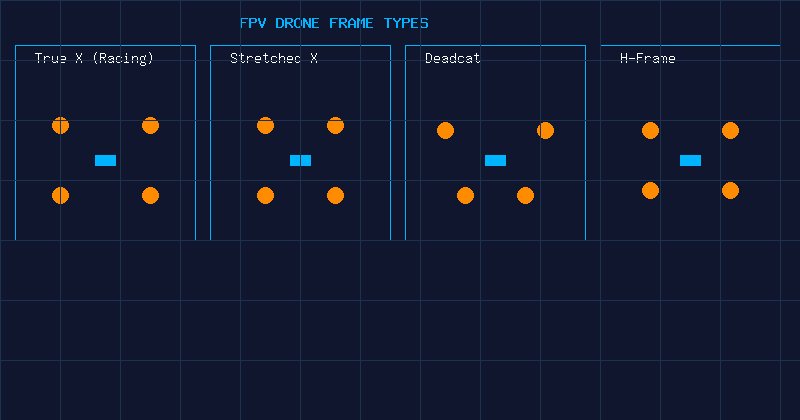
There are four main frame geometries used in FPV drones today:
True X
The motors form a perfect square. This is the most popular design for racing and acro because it offers the most symmetrical handling. All four arms are equal length, giving balanced pitch and roll authority. True X frames like the ImpulseRC Apex and TBS Source One are classic choices.
Stretched X
Also called a “long X,” this design moves the front and rear motors slightly further apart than the side motors. This gives more stability in forward flight at the cost of slightly reduced roll authority. It’s ideal for freestyle where you’re mainly flying forward. The Armattan Badger uses this geometry.
Deadcat (or “Lazy X”)
Named after its cat-like stance, the Deadcat pushes the front motors outward and the rear motors closer together. The key advantage: the propellers stay out of the camera’s field of view entirely. This means no props in your HD footage, which is why many cinematic and freestyle pilots prefer it. The iFlight Nazgul series uses this layout.
H-Frame
The classic design with two long side plates and cross braces. H-frames are easy to build and maintain, with plenty of room for electronics. They tend to be heavier but very durable. Great for beginners learning to build.
Frame Materials
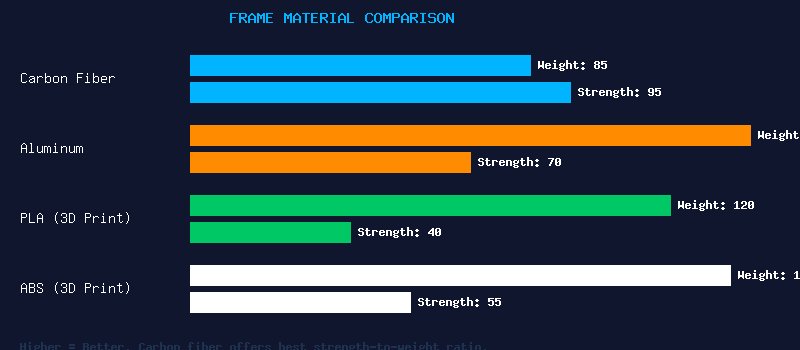
Carbon Fiber is the gold standard. It’s incredibly stiff, lightweight, and strong. Look for frames made from 3K or T700 carbon fiber with at least 3mm thick arms for 5-inch builds. A quality carbon frame will survive crashes that would destroy cheaper materials. The downside is cost and the fact that carbon fiber blocks radio signals, so antenna placement matters.
Aluminum frames exist but are increasingly rare. They’re heavier than carbon and can bend in crashes rather than flex and recover. Avoid aluminum for serious FPV flying.
3D Printed Frames made from PLA or PETG are popular for micro and whoop-class drones. For 5-inch builds, 3D printed frames can work if designed with thick walls and proper infill, but they won’t match carbon fiber for durability. TPU printed parts are excellent for accessory mounts though.
Key Features to Look For
- Arm Thickness: At least 5mm for 5-inch, 6mm+ for 7-inch. Wider arms (12mm+) resist twisting better than narrow arms.
- Replaceable Arms: Look for frames with individually replaceable arms. When you break one, you only replace that arm rather than the entire bottom plate.
- Camera Protection: The frame should have side plates or a cage that protects your FPV camera. A destroyed camera mid-session ends your flying day.
- Stack Mounting: Check that the frame supports your FC/ESC stack size (20x20mm, 30.5×30.5mm, or whoop-style). Some frames support multiple patterns.
- Weight: A 5-inch frame should weigh 90-140g. Lighter isn’t always better — durability matters. For long-range builds, lighter frames help with flight time.
Recommended Frames by Category
Racing: ImpulseRC Apex (120g, True X), Five33 Switch (130g, True X)
Freestyle: Armattan Badger (145g, Stretched X), TBS Source One V5 (125g, True X)
Cinematic/Long Range: iFlight Chimera series, GEPRC Mark4 (Deadcat options available)
Beginner Budget: TBS Source One V5 — open source design, affordable replacement parts, massive community support.
Conclusion
Your frame choice shapes your entire FPV experience. For most pilots, a True X or Deadcat frame in carbon fiber with replaceable arms hits the sweet spot. Start with something durable and well-supported, and as your skills progress, you’ll develop a feel for what geometry suits your flying style best. Remember: you’ll crash a lot when learning, so prioritize durability over saving a few grams of weight.