
Introduction
Entering the world of FPV (First Person View) drones can be overwhelming. With hundreds of options spanning tiny whoops, cinewhoops, freestyle quads, and long-range cruisers, knowing where to start is half the battle. This guide breaks down everything a beginner needs to know before purchasing their first FPV drone.
Understanding FPV Drone Categories
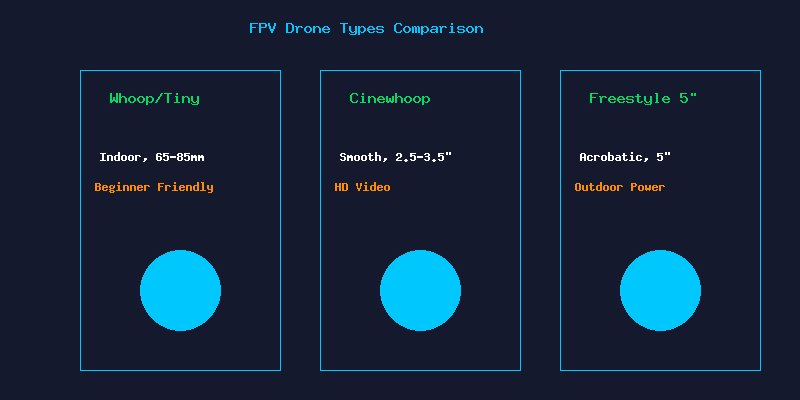
FPV drones come in several distinct categories, each designed for specific use cases:
- Tiny Whoops (65-85mm): Indoor-friendly micro drones weighing under 100g. Perfect for learning throttle control and basic maneuvers. Popular models include the BetaFPV Meteor series and Happymodel Mobula.
- Cinewhoops (2.5-3.5 inch): Ducted prop guards make these safe for flying near people and property. Ideal for real estate footage and cinematic indoor shots. The GEPRC Cinelog and iFlight ProTek are top picks.
- Freestyle 5-Inch: The standard for outdoor acrobatic flying. These 5-inch prop quads offer the best power-to-weight ratio for flips, rolls, and power loops. Expect to spend $250-$400 on a quality bind-and-fly model.
- Long Range (7-inch): Built for endurance and distance, often equipped with GPS rescue modes and high-efficiency motors for 10+ minute flight times.
RTF vs BNF vs DIY: Which Path Should You Take?
Ready-to-Fly (RTF): Includes drone, radio, goggles, and batteries in one box. The fastest way to get airborne but offers limited upgrade paths. Expect to pay $300-$600.
Bind-and-Fly (BNF): The drone comes pre-built and configured; you supply your own radio and goggles. This is the most popular route for beginners who want quality gear from day one. Budget $200-$400 for the drone plus $300-$500 for radio and goggles.
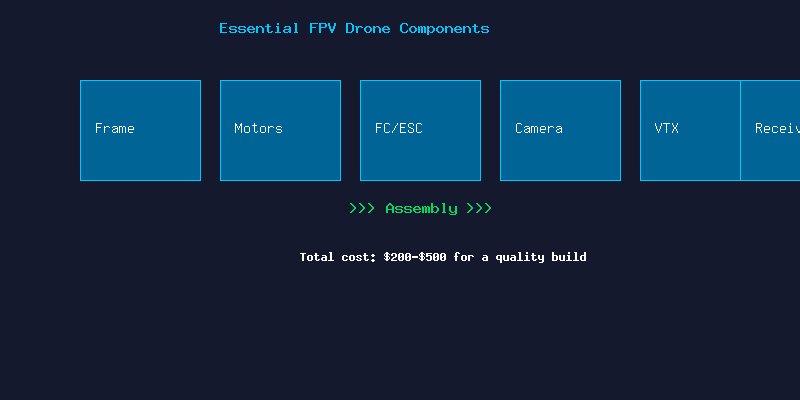
DIY Build: Source every component and assemble it yourself. While this teaches invaluable skills, it is not recommended as a first drone unless you have strong electronics experience. A DIY 5-inch build typically costs $200-$350 in parts.
Essential Gear Beyond the Drone
FPV Goggles
Your window into the cockpit. Budget options like the Eachine EV800D ($100) offer a box-goggle experience with a built-in DVR. Mid-range digital options like the DJI Goggles Integra or Walksnail Avatar HD Goggles X ($400-$600) provide stunning HD video with low latency. Analog remains the cheapest entry point.
Radio Controller
The RadioMaster Pocket ($65) and Boxer ($140) run EdgeTX/OpenTX and support the ExpressLRS protocol, which dominates the hobby in 2026. ELRS offers incredible range (5km+) and low latency at a budget price. Avoid old FrSky ACCST radios — the ecosystem is fragmented and confusing for newcomers.
Batteries and Charger
LiPo batteries are the lifeblood of FPV. A 6S 1300mAh pack ($25-$35) gives 4-7 minutes of aggressive flying on a 5-inch quad. Invest in a quality balance charger like the Hota D6 Pro or ISDT 608AC. Never skip on battery safety: always storage-charge to 3.8V per cell and use a LiPo-safe bag.
Budget Breakdown
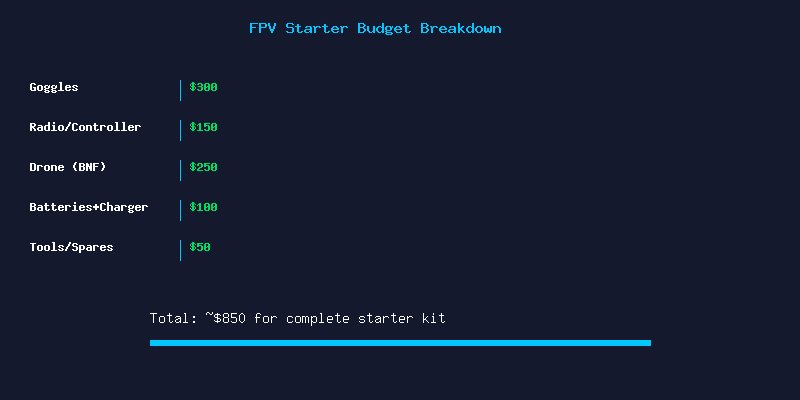
A complete entry-level analog starter kit costs approximately $500-$700, while a digital HD setup ranges from $900-$1,300. We recommend the BNF + separate radio and goggles approach for the best balance of quality and value.
Simulator Practice — Your First $20 Should Go Here
Before risking a real drone, spend 10-20 hours in an FPV simulator. VelociDrone, Liftoff, and Uncrashed are the top three picks in 2026. A simulator teaches muscle memory for throttle control, coordinated turns, and acro mode without the $100 repair bills. Connect your radio via USB and start with angle mode before graduating to full acro.
Recommended Starter Combos for 2026
- Budget Analog ($550): BetaFPV Pavo20 Whoop + RadioMaster Pocket + Eachine EV800D
- Mid-Range HD ($950): iFlight Nazgul5 V3 + RadioMaster Boxer + Walksnail Goggles X
- Premium Digital ($1,400): GEPRC Mark5 + DJI Goggles 3 + DJI FPV Remote 3
Final Advice
Your first FPV drone should prioritize durability and repairability over raw performance. Expect to crash — a lot. Order spare arms, props, and motors alongside your first quad. Join the UAVModel community for build tips, tuning advice, and flight footage. The FPV journey is challenging but incredibly rewarding.