
Introduction
While carbon fiber dominates structural FPV components, TPU (Thermoplastic Polyurethane) is the unsung hero of drone accessories. This flexible, durable material excels at producing parts that protect, secure, and enhance your build. From antenna mounts to battery skids, here is your complete guide to 3D printing essential TPU parts for FPV drones.
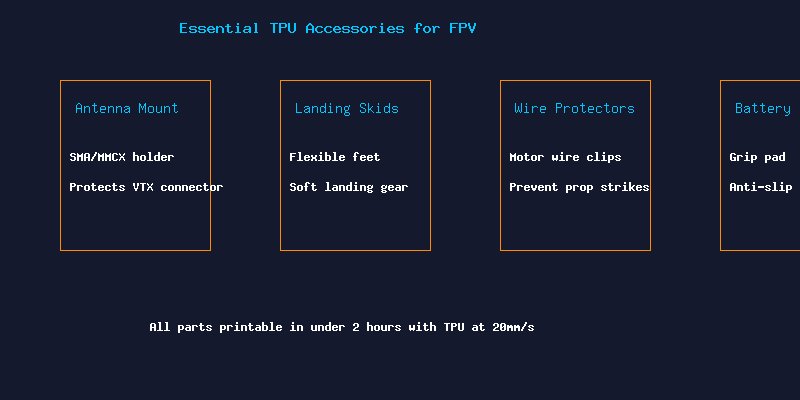
Antenna Mounts: Protecting Your Most Vulnerable Component
The VTX antenna takes more abuse than almost any other component. A rigid mount transfers crash forces directly to the SMA/MMCX connector, often ripping it off the VTX board. TPU antenna mounts solve this by flexing on impact. Designs typically use two M3 standoffs to secure to the frame with the antenna passing through a TPU sleeve. Popular designs include the TBS Triumph TPU mount and the Lumenier AXII holder. Position the antenna at 90 degrees to the frame for optimal radiation pattern during forward flight.
Landing Skids and Arm Protectors
Landing on concrete, gravel, or asphalt chews through carbon fiber arms and motor bottoms. TPU skids add a sacrificial wear layer that costs pennies to replace. Print them slightly undersized for a snap-fit onto 5-6mm arms, or use zip ties through integrated channels for secure attachment. Some designs incorporate LED diffusers for night flying visibility. Motor bell protectors printed in TPU also prevent bent bells during inverted crashes.
Motor Wire Protectors
Motor wires routed along the arms are vulnerable to prop strikes during crashes. TPU wire protectors clip onto the arm and create a channel for clean wire routing. These small prints use less than 1g of filament each and can save you from replacing a motor due to damaged windings. The “RaceWire” style designs integrate LED boards for additional visibility.
Battery Pads and Straps
A good TPU battery pad provides grip that prevents the LiPo from ejecting during hard maneuvers. Design your pad with a textured top surface and slots for two battery straps. The pad should extend the full length of your battery for maximum contact area. Some pilots integrate an action camera mount into the battery pad for a bottom-mount GoPro setup, which lowers the center of gravity for improved flight characteristics.
Camera and VTX Mounts
Micro cameras and VTX boards often lack good mounting solutions. TPU mounts can secure a Caddx Ant or Runcam Nano to any frame geometry. Design a press-fit cradle with 0.3mm clearance and add a small dab of E6000 adhesive for permanent installations. For VTX boards, standalone TPU mounts with M2 screw holes keep the board elevated off the carbon for electrical isolation.
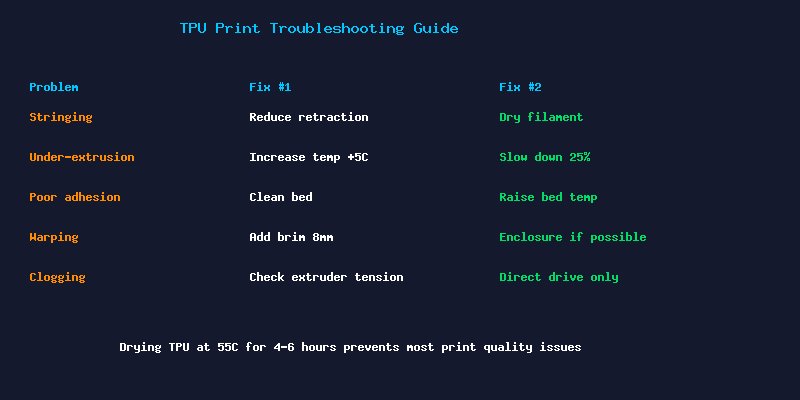
TPU Printing Tips and Troubleshooting
- Dry your filament: TPU is extremely hygroscopic. Moisture causes popping, stringing, and poor layer adhesion. Dry at 55C for 4-6 hours before printing.
- Direct drive required: Bowden extruders struggle with flexible filaments. Direct-drive setups like the Bambu Lab series, Creality Sprite, or Micro Swiss NG handle TPU reliably.
- Slow and steady: 20-30mm/s print speed is the sweet spot. Faster printing causes inconsistent extrusion and poor layer bonding.
- Minimal retraction: 1-2mm at 25mm/s prevents the filament from jamming in the extruder gear area. Too much retraction pulls soft TPU into the cold zone.
- Build surface: Textured PEI sheets provide the best adhesion. Clean with isopropyl alcohol before every TPU print.
Recommended Filaments
Sainsmart TPU has been the community standard for years with consistent 95A hardness and reliable printing. Overture High Speed TPU prints faster (up to 40mm/s) while maintaining excellent layer adhesion. For extreme durability, NinjaTek Armadillo offers 75D hardness that behaves more like a rigid material while retaining flexibility.
Conclusion
TPU 3D printed parts are essential for any well-equipped FPV workshop. Start with antenna mounts and landing skids — these provide immediate crash protection benefits. As your CAD skills improve, design custom parts that solve specific problems on your builds. The satisfaction of designing, printing, and flying your own custom accessories is a core part of the FPV experience.