
FPV drone racing is one of the most exhilarating sports in the world — five-inch quads flying at 100mph through gates and around flags, all seen through first-person goggles. But going from casual freestyle to competitive racing requires a fundamentally different approach to flying, building, and practicing. This guide covers the techniques, drills, and mindset shifts that take you from beginner to podium contender.
1. The Racing Mindset — Speed Is Smooth
The single most important lesson in FPV racing: smooth flying is fast flying. Jerky corrections scrub speed. Over-controlling wastes momentum. The fastest pilots look like they are flying in slow motion because every movement is deliberate and minimal. Before you worry about lap times, focus on completing three consecutive laps without touching a gate. Speed comes from consistency, not aggression.
You can find racing frames, motors, and components optimized for competition at UAVMODEL. A purpose-built racing quad handles differently from a freestyle build — lighter, stiffer, and tuned for response over forgiveness.
2. Essential Racing Drills for Beginners
Practice with purpose. These drills build the muscle memory that makes gates feel automatic:
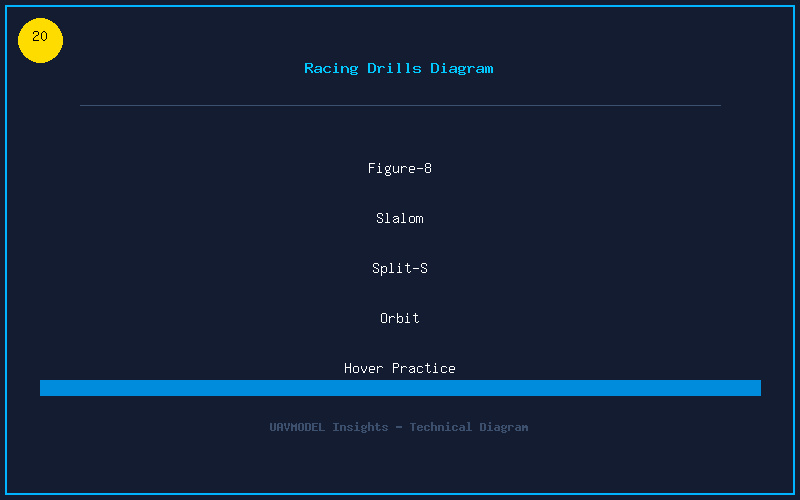
- Figure-eight around two gates. Set two gates 20-30 meters apart. Fly figure-eights around them at constant altitude. This teaches coordinated yaw and roll. Start slow, gradually increase speed. Do it clockwise and counter-clockwise.
- Slalom gates. Line up 4-5 gates in a row. Fly through alternating sides — left of gate 1, right of gate 2, left of gate 3. This builds precision at speed.
- Split-S gate entry. Approach a gate from above, Split-S through it, and exit low. The Split-S is the most common race maneuver. Practice it until you can hit the gate center every time from any approach angle.
- Hover practice. Hover nose-out at eye level for 30 seconds. Then nose-in (facing yourself) for 30 seconds. Throttle control is the most underrated racing skill.
- Orbit practice. Fly a perfect circle around a flag or tree, keeping the object centered in frame. Vary the radius from 2 meters to 15 meters. This teaches coordinated turns.
3. Gate Approach and Exit Technique
Racing is won and lost in the corners — specifically, how you enter and exit each gate:
- Look at the next gate before you exit the current one. Your eyes should be one gate ahead of your quad. As you approach a gate, you should already be looking at the next one and planning your line.
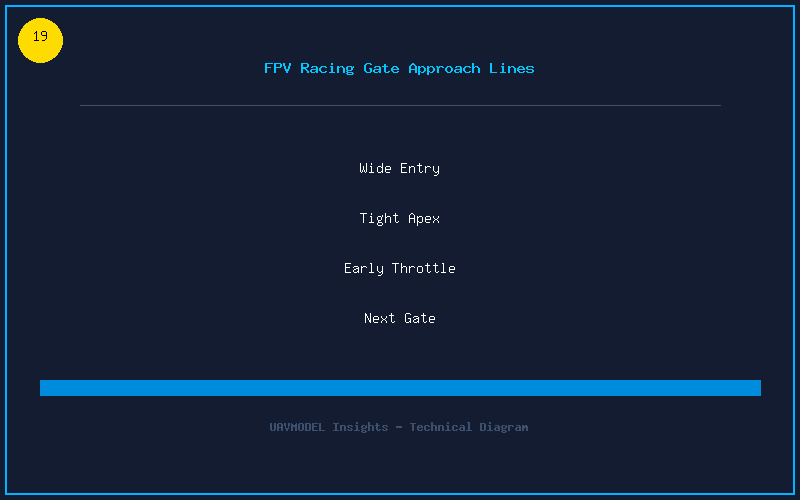
- Wide entry, tight exit. Enter gates from the outside of the turn and apex close to the inside gate edge. This opens up the exit, letting you carry more speed onto the straight.
- Altitude management. Every unnecessary climb costs speed. Stay as low as possible through gates without risking a ground strike. The fastest line is usually the flattest one.
- Throttle before the gate, not after. Apply throttle as you enter the turn, not after you exit. By the time you are straight, you should already be at full speed. Late throttle costs time on every straight.
4. Building a Race-Optimized Quad
A racing build sacrifices durability and features for speed and agility:
- Frame: Lightweight racing frame with replaceable arms. The ImpulseRC Apex or TBS Source One (lightened) are popular. Target under 80g for the bare frame.
- Motors: 2207 1950-2100KV on 6S. Racing motors need high RPM capability. T-Motor F60 Pro V or Xing 2207 are race-proven.
- Props: 5.0-inch triblades with aggressive pitch (4.8-5.0 pitch). HQProp R38 or Gemfan 51466. Lower pitch props (4.3) are easier to control but slower on straights.
- Battery: 6S 1300mAh with genuine high C-rating. Tattu R-Line or CNHL Black series hold voltage under racing loads.
- Weight target: Under 250g dry weight (no battery, no GoPro). Every gram matters. Remove LED boards, unnecessary standoffs, and use nylon screws where possible.
- Camera angle: 35-55 degrees. Higher angle = faster cruise speed but harder low-speed control. Start at 35 degrees and increase as you get faster.
5. Simulator Practice — Your Secret Weapon
Top racers spend as much time in simulators as they do in the air. Sim practice is free, unlimited, and crash-costs nothing. The best simulators for racing:
- Velocidrone — The gold standard for racing simulation. Best physics, largest multiplayer community, and tracks that mirror real MultiGP courses.
- Liftoff — Excellent graphics and a large workshop of community-created tracks. Physics are slightly more forgiving than real life.
- DRL Simulator — Official simulator of the Drone Racing League. Great for learning high-speed precision on large courses.
Commit to 30 minutes of sim practice daily. Focus on a specific skill each session — one day on Split-S entries, another on tight slaloms. Track your lap times and compete against your own ghosts. When you can consistently hit sub-20-second laps on MultiGP UTT1 in the sim, you are ready for a real race.
6. Your First Race — What to Expect
Showing up to your first MultiGP or local race is intimidating. Here is what to bring and what to expect:
- Bring at least two identical quads. Crashes happen. A backup quad means you keep racing instead of watching from the pits.
- Bring 8-10 charged batteries. Between practice heats and actual races, you will fly more packs than you expect. Charge all packs to 4.2V/cell for maximum power.
- Know your video channel. Race directors assign video frequencies. Know how to change yours quickly. Have your VTX table loaded and tested.
- First heat strategy: Just finish. Do not try to win your first heat. Complete all laps without crashing. Finishing last is better than DNF. Experience is the goal.
- Marshall when you are not flying. Marshalling (retrieving crashed quads for other pilots) is mandatory and builds community. Be ready with gloves and a spotter.
FPV racing rewards dedication. The pilots on the podium have hundreds of hours of stick time and thousands of sim laps. Start with the fundamentals, practice deliberately, and remember that every race is a learning experience. The gap between beginner and competitive is smaller than it looks — consistency beats talent on race day.